

High-Protein Foods You Can Carry
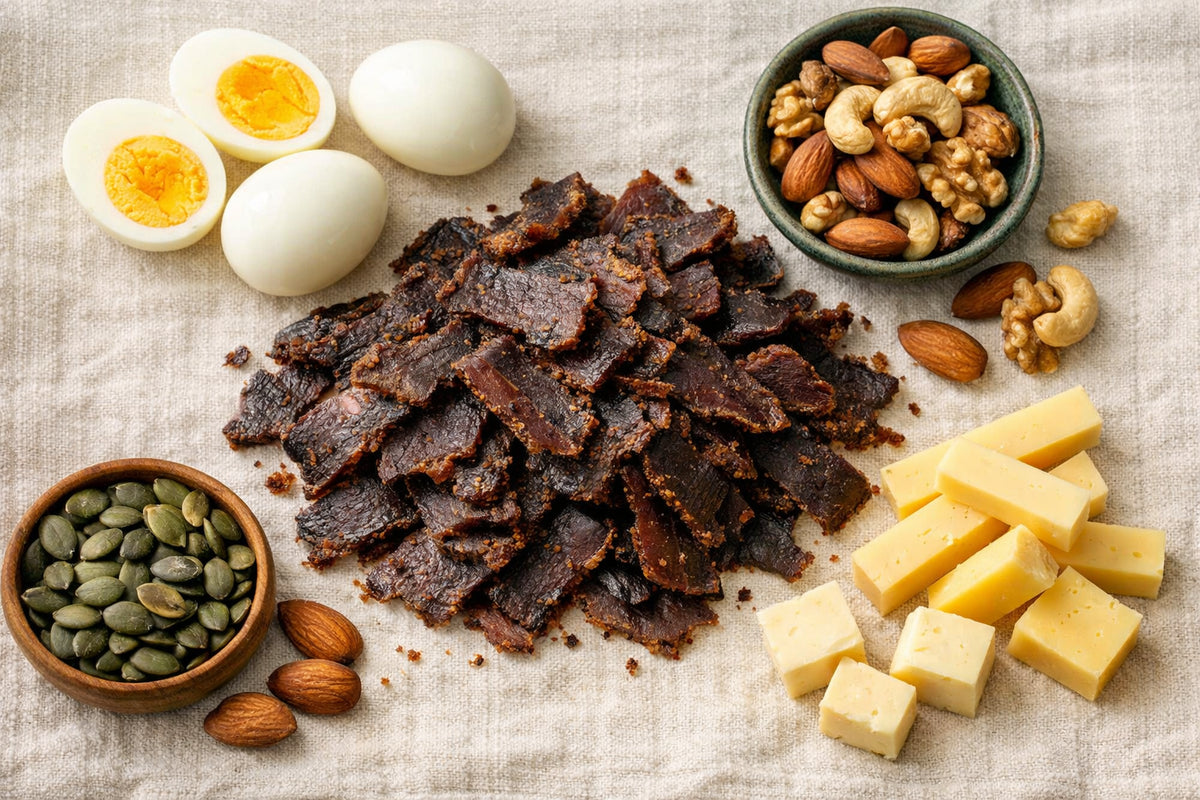
The best high-protein foods you can carry are ones that are ready to eat, easy to pack for the day and do not turn to mush in a bag: Biltong, hard cheese, boiled eggs, tinned fish, nuts and a few sturdy fruits. Of those, air-dried Biltong is the one that gives you the most protein for the least fuss, with over 60g of protein per 100g and no added sugar, all in a small package you can slip into a pocket.
If you want the honest version of why we rate it so highly, our piece on whether Biltong is healthy lays out the numbers, but this guide is about what actually survives a day out of the house.
What makes a good protein to carry?
Three things. It has to be easy to carry for a day out, it has to be genuinely high in protein rather than mostly carbs pretending to be a protein food, and it has to be pleasant to eat with your hands. Plenty of foods manage one of those. Fewer manage all three at once.
The reason this matters is that when you are out and hungry, the easy option is usually something sugary and low in protein that leaves you hungry again an hour later. Carrying real protein means you are not at the mercy of whatever is nearest, whether that is a service station, an airport, or the one open shop near the pitch.
Which high-protein foods travel well?
Biltong is the standout: light, dry, ready to eat and packed with protein you can carry in a pocket. Hard cheeses like a mature cheddar hold up for a few hours and give you protein and fat. Boiled eggs are cheap and filling if you do not mind peeling them. Tinned fish, tuna or sardines, is excellent protein, though it needs a tin opener and a moment of privacy. Nuts add protein and fat, but watch the quantity, they are easy to over-eat.
The trade-offs are real. Eggs and fish are brilliant at home but awkward on a train. Nuts are convenient but more fat than protein. Biltong sits in the sweet spot of high protein, low fuss and easy to carry, which is why it tends to become the reliable one you always keep on you.
Why is Biltong so good for this?
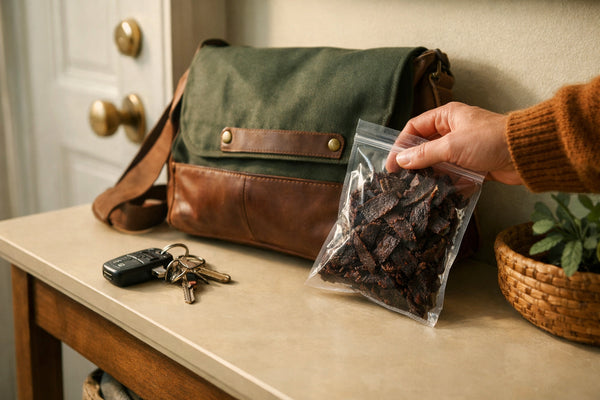
Because it was made to travel. Air-drying removes most of the moisture, so you are left with something light and dense in protein. A small bag goes in a jacket, a rucksack or a glovebox and does not complain about being forgotten for a couple of hours.
It is also just proper food. Ours is six ingredients: Portuguese beef, apple cider vinegar, Worcester sauce, sea salt, black pepper and toasted coriander seeds. Over 60g of protein per 100g, about 3g of carbs, no added sugar and no artificial preservatives. When you are hungry and out, that is a lot of substance in a small package, and none of the sugar crash that comes with sweeter options.
What should you avoid carrying?
Anything that needs to stay cold, anything that gets crushed, and anything sold as high-protein that is really a bar held together with syrup. Yoghurts and fresh meats are great protein but poor travellers without a cool bag. Many so-called protein bars are closer to confectionery once you read the sugar content on the back.
The simple test: read the back of the pack. If the first thing you see is sugar and the protein figure is modest, it is not going to do the job you wanted it for. Real protein foods put the protein first and keep the rest short and simple.
How does carrying protein help through a long day?
Protein is the most filling of the main nutrients, so it holds off hunger for longer than a quick sugary fix. That matters on the days when meals get pushed back: a long drive, a full day of matches, travelling, or work that runs past lunch. Having real protein on you smooths out those gaps so you are not running on empty and then over-eating the moment you finally sit down.
It also keeps your choices your own. When you already have something proper to eat in your bag, you are not forced into whatever the nearest counter happens to sell. That small bit of planning tends to pay off in steadier energy and better decisions right through the day.
How do you build a day's worth of carry-along protein?
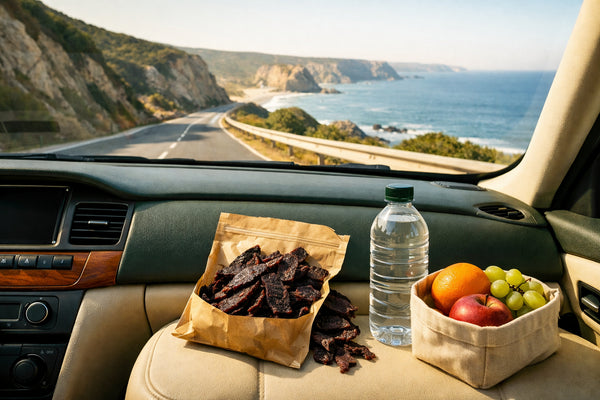
Pair a dense, stable protein with something fresh. A bag of Biltong plus a piece of fruit and a handful of nuts covers you for most of a day out, gives you protein when you need it, and does not depend on finding a shop. Keep the Biltong as your reliable base and vary the rest to taste.
The point is not to carry a feast. It is to always have something proper to eat on you, so hunger never forces a bad choice. Build the habit once, keep a bag topped up, and you stop thinking about it, which is exactly what you want from food you carry.
Does Biltong go off if I carry it around?
At home it lives in the fridge: out of the vacuum bag and sealed in a tray, where it lasts up to 5 days. For a day out, carry the day's portion in a small sealed container, keep it out of direct heat and eat it that day.
How much protein is in a bag of Biltong?
Over 60g per 100g for a lean cut, which is a high figure for something you can eat one-handed on the move.
Is Biltong better than a protein bar?
For carrying, usually yes. It is real meat with no added sugar, rather than a processed bar, and it tends to satisfy for longer.
What else should I pack alongside it?
Something fresh and something crunchy. A piece of fruit and a few nuts round out a day's portion of Biltong nicely.
If you want reliable protein you can carry, shop our Biltong. Packs are 17.50 EUR, there is a monthly subscription so you never run out, and every batch is made by hand in Portugal and ships within Portugal.
Keep reading

Protein per 100g
Six ingredients, no added sugar, delivered in 1–2 working days across mainland Portugal.